Tracking and attribution: fix the data first
Conversion tracking rebuilt from the ground up, call tracking, server-side tagging and Looker Studio dashboards that connect ad spend to CRM revenue, so every marketing decision rests on numbers you can trust.
Cosmo Californie Media rebuilds tracking and attribution so a business can see, in its own numbers, what its marketing produces. We fix broken conversion tracking in Google Tag Manager and GA4, add call tracking with first-time-caller and duration filters, install server-side tagging where browsers block the rest, feed offline sales and CRM outcomes back into the ad platforms, and build Looker Studio dashboards that put cost per lead next to cost per qualified lead and revenue. A lead tracking system we built for a service business reached 99% attribution across the customer lifetime, and a restoration marketing agency's dashboard turned its churn-prone PPC service into a growth channel.
- Who it is for
- Any business running ads, a CRM or a sales process whose reports disagree or cannot be trusted
- What is included
- Tracking audit, GTM and GA4 rebuild, call and form tracking, offline conversion import, server-side tagging, Looker Studio dashboards
- Tools
- Google Tag Manager, GA4, CallRail, WhatConverts, Nimbata, Looker Studio, Zapier, Make, n8n
- Typical timeline
- Audit in the first two weeks, tracking live within a month, dashboards after one full reporting cycle
- Billing
- Fixed-fee project from the audit scope, or part of a monthly retainer; change orders at $60 an hour
What does tracking and attribution work include?
An audit of everything that reports a number: the tags on the website, the conversions in each ad platform, the forms, the phone lines, the CRM fields and the dashboards built on top of them. Then the rebuild. Google Tag Manager and GA4 set up cleanly, with one definition of a lead shared by every platform. Call tracking with dynamic number insertion, so a phone call is tied back to its channel, campaign and keyword, filtered to first-time callers who stay on the line past a minimum duration. Form tracking that distinguishes a quote request from a job application. Server-side tagging where browser restrictions and cookie policies drop the data. Offline conversions, such as a quote closed by phone or a patient who showed up, imported back into the ad platforms. And a Looker Studio dashboard that answers the questions the owner actually has.
Why start here rather than with the campaigns?
Because every other decision rests on it. Since the anti-cookie changes of 2024, many businesses have been running on broken attribution, misfiring conversions and reports that conflict across platforms, and optimisation on bad data is guesswork. The ad platforms also learn from what you report back. Send Google a conversion for every phone click and it will find you people who tap call buttons. Send it a new caller who stayed on the line for more than 30 seconds and it goes looking for more of those. In a local medical practice that single change cut the cost per booked appointment by 26.5% and lifted the lead-to-appointment rate from 47.6% to 60%, with the ads, budget and pages untouched. In a medical clinic, it tripled monthly new patients while the dashboard showed fewer conversions at a higher cost, because the old numbers had been inflated.
What does a good dashboard show?
Two numbers side by side are usually enough to change a conversation: cost per lead as the ad platform reports it, and cost per qualified lead based on call quality and purchase intent. When they diverge, the cause is either lead quality at the acquisition end or missed calls and slow follow-up inside the business, and the dashboard says which. We built exactly that for a marketing agency serving home restoration companies, connecting website conversions, CallRail and Google Ads directly in Looker Studio with no automation tools in between. Churn fell, clients improved their response rates, and the agency was acquired by private equity in late 2025.
For a service business whose lead system and CRM did not talk to each other, we built a lead tracking system in Google Sheets with six checkpoints from raw lead to procedure start, fed automatically by call tracking, form tracking and Zapier. Staff update one column and the business has 99% lead attribution across the customer lifetime, with lead quality, schedule rate, show rate and cost per procedure start by channel.
How do you decide what to track?
With the five-step process Sonny describes in How to Understand What's Actually Working in Your Business. Write down the decision-oriented questions you want answered, push each one a level deeper for comparison, check whether the data is collected and where it lives, connect the systems, and then visualise the result. Most growing businesses already have the data. The work is identifying which inputs matter and getting them into one place.
What does it cost?
Tracking rebuilds are usually scoped as a fixed-fee project from the audit, with the audit fee credited against it if we proceed. Dashboards and ongoing monitoring sit inside a monthly retainer when we also manage the ads or the CRM. Change orders and consulting outside the scope are $60 an hour, agreed before the work starts. Call tracking itself runs on a tool that costs between $50 and $250 a month; we hold partner status with CallRail for the US, Canada, UK and Australia and with Nimbata for Europe, and existing clients get $50 off our monthly work when they sign up through us.
If your reports disagree with each other, or with what your sales team sees, shoot me a message and we can map out which numbers to fix first.
Book a CallQuestions about this service
What is call tracking and do I need it?
Call tracking assigns a dynamic phone number to each visitor and stitches the resulting call back to its channel, campaign, landing page and often the keyword. It also knows whether the number has called before and how long the call lasted. If your business sells anything above about $117, most prospects want to talk to a human before buying, which makes the phone your highest-intent channel and the one most accounts measure worst.
What is server-side tracking?
Tags that run on a server you control instead of in the visitor's browser, so ad blockers, browser privacy settings and short cookie lifetimes stop dropping conversions. We add it where the audit shows the browser-side data is incomplete, which has been the case for most businesses since 2024.
Can you connect offline sales to my ads?
Yes. For a UK ducting supplier we synced the offline quoting system with WooCommerce and added the buyer's phone and email to proforma invoices, so quotes could be matched against the calls and forms tracked in WhatConverts. In August 2026 the dashboard matched 271 of 292 orders to their source, including offline orders.
Which dashboard tool do you use?
Google Looker Studio, because it is accessible, cost-effective and connects to Google Ads, GA4, Google Sheets and most CRMs. Where a direct connection is missing, an automation tool such as Zapier, Make or n8n plus Google Sheets gets the data in.
How long does a tracking rebuild take?
The audit takes the first two weeks. Tracking changes are usually live within a month, and the ad platforms need a few weeks of the cleaner data before bidding reflects it. Dashboards come after at least one full reporting cycle, so the first version is built on real numbers.
Will fixing tracking make my numbers look worse?
Often, yes, at first. Reported conversions drop and cost per conversion rises when inflated or duplicated conversions are removed. The real metrics, new customers and cost per customer, improve, and the case studies on this site show both sides so you know what to expect.
Working with us.
Let's figure out where your growth is getting stuck.
Book a discovery call with Sonny — a focused conversation about your business and where the opportunities are.
Book a Discovery CallCase studies for this service
The Value of Call Tracking When Running Paid Ads
Booked appointments rose from 98 to 141 a quarter and cost per booking fell 26.5% for a local medical practice once call tracking fed Google Ads.
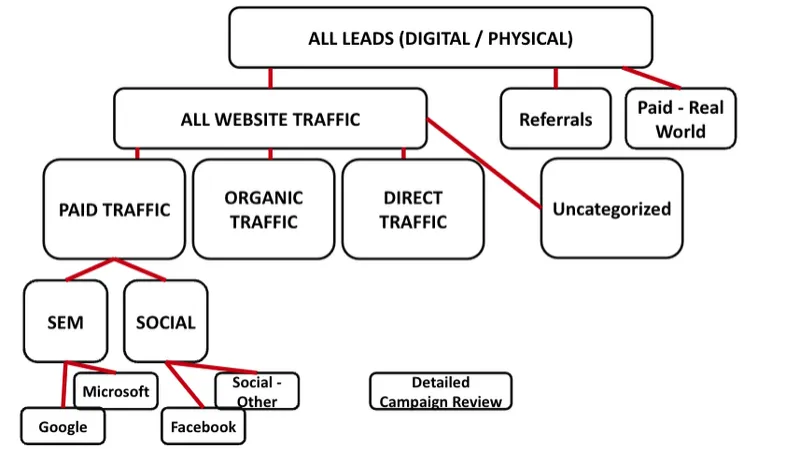
LCRM: Lead Tracking System
One tracking system follows every lead from first contact to procedure start, so each channel is credited across the customer lifetime.
Using a Unified Looker Studio Dashboard to Reduce Client Churn
One dashboard across website conversions, CallRail and Google Ads for a home-restoration marketing agency, which was later sold to private equity.