2025 in Review: I Set Out to Help 100+ Companies Increase Their Revenue. This Is What I Learned.
In 2025 Cosmo Californie Media set out to help more than 100 companies increase revenue and worked with over 140 businesses across North America and Europe. The work ran through white-label search for three agencies, B2B lead generation in France, the US, the UK and Europe, tracking rebuilds, CRM implementations and a new automation department. Across all of it, the upside came from tightening tracking, cleaning up attribution, improving lead handling and aligning campaigns with how each business actually converted.
- Author
- Sonny Hughey, owner and founder
- Scope
- 140+ businesses supported in 2025, North America and Europe
- Services covered
- White-label SEM, B2B lead generation, tracking and dashboards, CRM and automation, 1-on-1 consulting
- Markets
- United States, Canada, France, United Kingdom, Europe
At the start of 2025, I set a clear objective for Cosmo Californie Media: support more than 100 companies in increasing revenue through measurable, operationally sound systems.
By the end of the year, we had worked with over 140 businesses across North America and Europe. Our work included agency partnerships, B2B lead generation programs, owner-operated service companies, advanced tracking and reporting builds, CRM implementations, and custom automation projects.
Across all of it, the focus remained consistent: build reliable infrastructure around demand, sales, and performance measurement so growth could scale without creating operational fragility.
Scaling Agencies Through White-Labeled SEM
A significant portion of our 2025 work came through white-label search engine marketing partnerships. We supported three agencies as their behind-the-scenes SEM team across Google Ads and Microsoft Ads.
In this context, I’ll focus on two of them. One partner was deeply niched in the medical space, serving practices throughout the United States and Canada. Another focused on the water, fire, flood, and mold damage restoration industry, where lead quality, speed, and attribution are critical.
In both cases, we operated at the system level—owning performance, reporting, and infrastructure so the agencies could scale with consistency.
AGENCY 1: From 31% potential churn rate to 3.1% in 3 quarters -> See details
AGENCY 2: Looker Studio Report for Clarity in Client Comms -> See details
Driving B2B Lead Generation Across Markets
We also worked directly with B2B businesses across France, the United States, the United Kingdom, and broader European markets. These engagements often involved longer sales cycles, higher-value deals, and greater operational complexity.
SEM was often the entry point, but success depended on alignment between marketing channels, CRM structure, and sales follow-up. This is where our revenue + ROI oriented tilt with our expertise in sales funnels gave these businesses an edge. When all these pieces worked together, lead quality and business revenue improved.
1. B2B Training Center (Online + In Person)
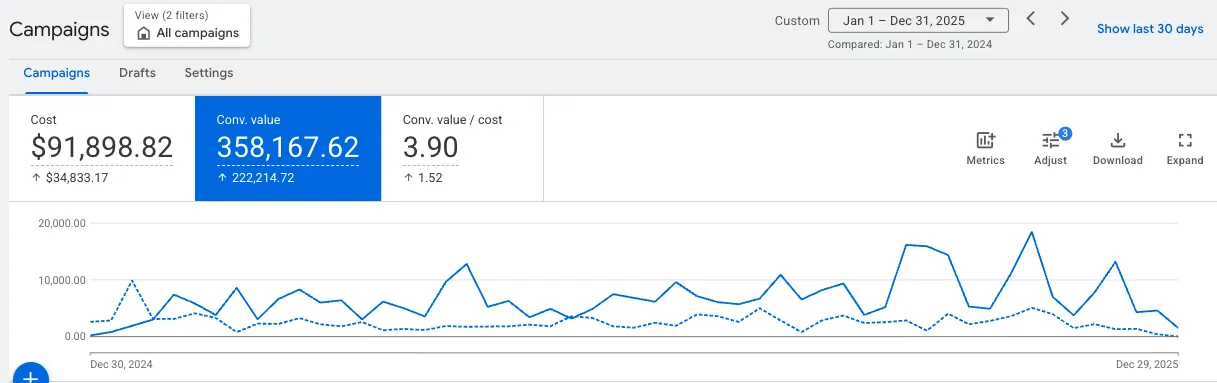
We were able to increase revenue for an online training center by atleast 260% ($220K increase YOY). This came from deep optimization, niching down offerings to be super specific and diversifying to target new demographics. While we spent about 30% more YOY we increased return on spend to 3.9 - A much more profitable range for this client.
2. B2C (Pros) Training Center (Online / Professional Exam Prep)
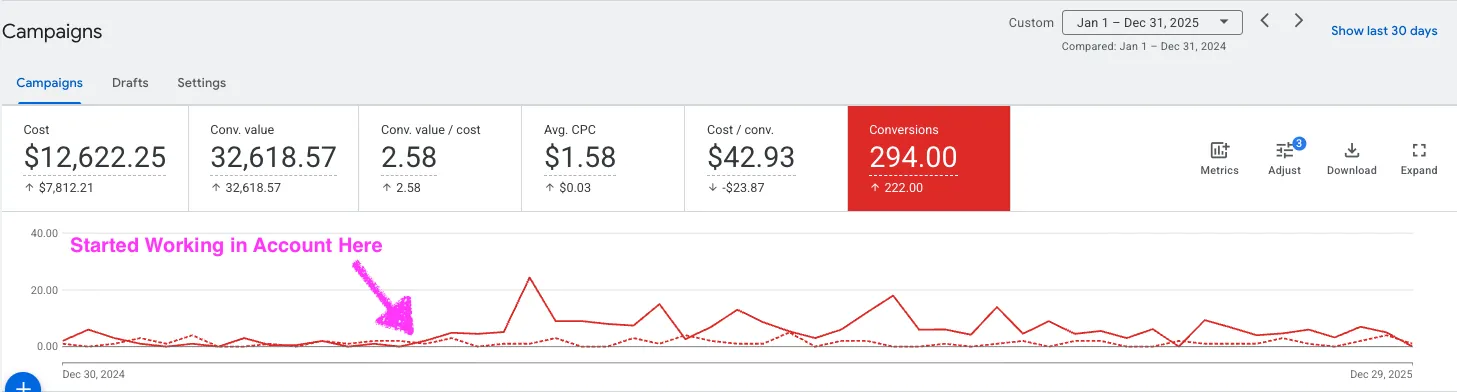
In a similar niche for coursework / exam prep we were able to take a small player who was running ads on their own into a profitable place to continue running google ads. This client is small and competes against national brands in exam and test prep. Despite this we were able to come into the account, apply improved conversion tracking with attributed values and grow the account past a simple break even range where it is now generating consistent, profitable revenue. (Both of this account and the one above, we are actually underreporting our revenue numbers because dynamic value tracking was not something the customers signed up for, so we are reporting static values for the conversions, assuming each purchase is from their cheapest offering) We chose to do this because if we are showing profitable performance in ads, reality will be higher.
3. B2B SaaS Payment System
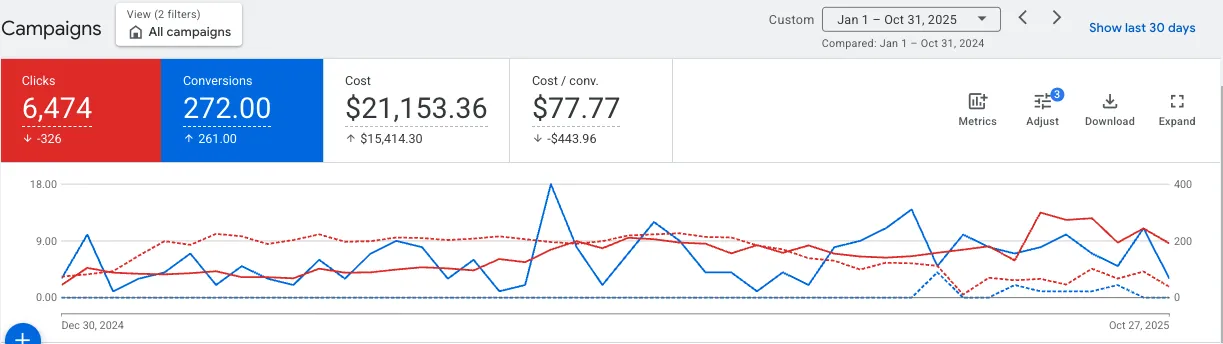
This client was a true SaaS business, selling B2B software that helped companies manage staff payments. Unlike training or coursework, this wasn’t a one-time transaction—it was recurring software infrastructure that sat inside the buyer’s operational stack. So naturally our strategies were different.
The primary goal of the account was to drive demo bookings. We leveraged their CRM (HubSpot) to pass back accurate conversion data and also synced directly with Calendly when prospects booked time on the sales team’s calendar. This gave us a much clearer view of real buying intent and as a result we drove down cost per conversion significantly. Previously, the company was only tracking calendar bookings as conversions. That limited the amount of usable signal being fed back into the ad platform, which restricted the algorithm’s ability to optimize effectively.
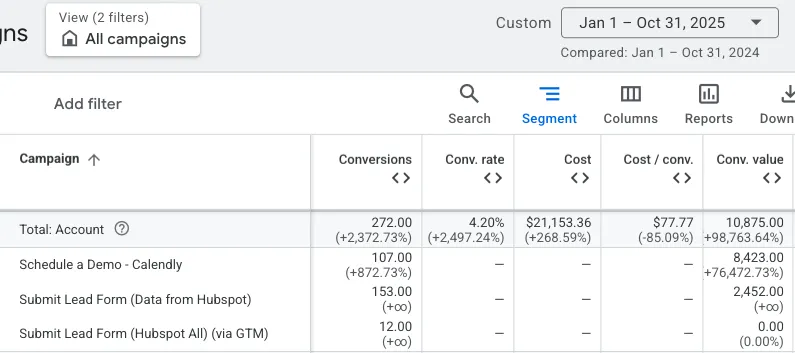
You will see above we drove down the cost/conversion, but that is not completely accurate since we were counting folks who simply filled out a form + those who booked through to a call. Our average form -> calendar booking conversion rate was around 65%. If we take that into account our cost/calendar booking direct was $197 which dropped the cost/booking in half from their performance before we started working in the account ($400/booking).
4. B2B Technical SaaS Product
This client provides technical software to building managers and design firms focused on reducing operating costs for existing infrastructure and improving efficiency in large construction projects.
Their primary lead generation strategy runs through LinkedIn Ads and Google Ads, driving registrations to monthly technical webinars.
Because the product is niche, has multiple application entry points, and requires strong technical fluency to implement, the sales process isn’t simple. They can’t rely on a dedicated sales rep handling lightweight demo calls. Most meaningful conversations require an engineer to be present. As a result, webinars became the main entry point into the funnel.
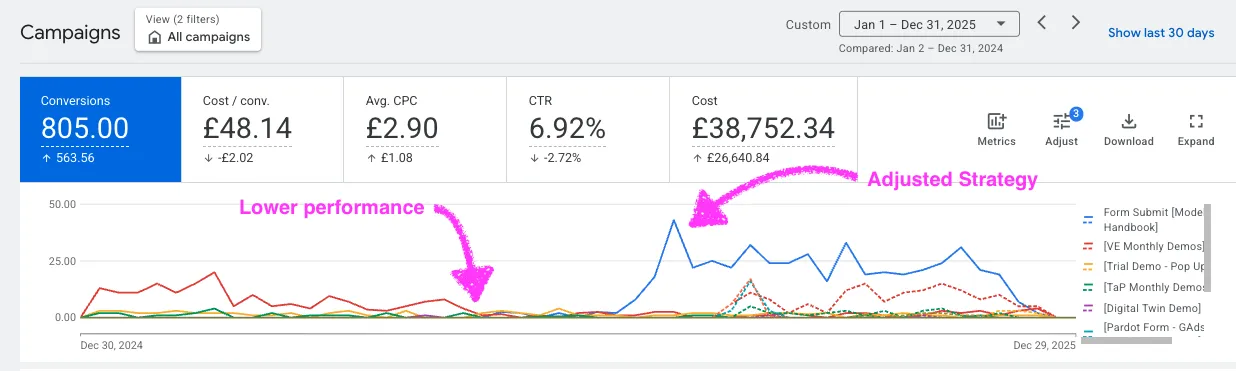
This created a structural challenge in Google Ads. We were targeting cold traffic with relevant intent, but asking them to register for a webinar that might be weeks away. Even when the targeting was correct, timing friction limited conversions.
At the beginning of the year, we addressed foundational improvements: conversion tracking accuracy, bidding strategies, tighter geo segmentation, and closer intent matching in campaign structure. These changes improved efficiency and stabilized performance, but the friction created by the webinar-first model remained. The company’s objective was to increase the number of qualified professionals entering their ecosystem. They already had a strong internal marketing and sales engine producing highly technical content across specific verticals. Their strategy was to expand their ecosystem and deepen engagement over time. On a 6- to 12-month timeline, conversion rates were strong once someone entered their world.
Given that, we adjusted the acquisition strategy. Instead of pushing webinar registrations as the primary conversion event, we introduced a lower-friction lead magnet: a free handbook that breaks down the fundamentals of the software and outlines how professionals in different roles can apply it within their responsibilities.
This aligned better with cold traffic behavior. As we closed out 2025, we maintained the same cost per lead the company achieved in 2024 while increasing spend and generating 3x the number of leads year over year.
Supporting Owner-Operated Businesses With Clarity
Some of the most impactful work we did in 2025 was with owner-operated businesses and teams of fewer than fifteen employees. These founders needed clarity around performance, priorities, and next steps.
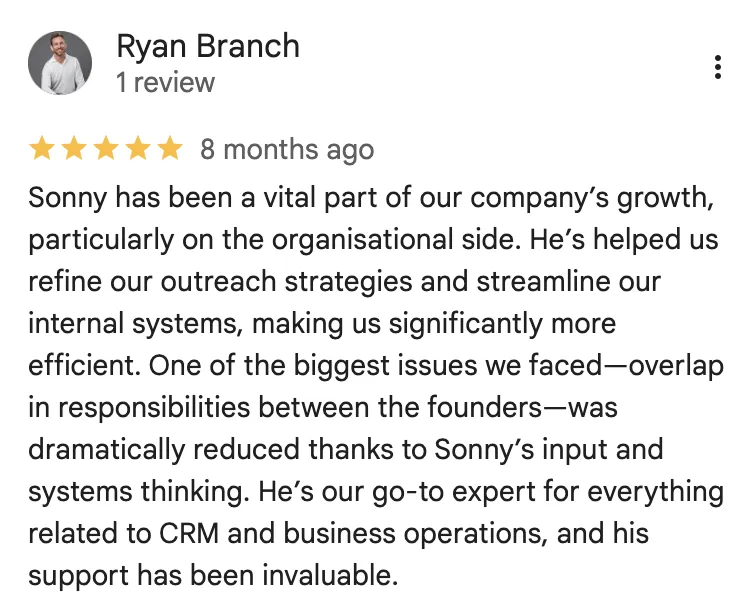
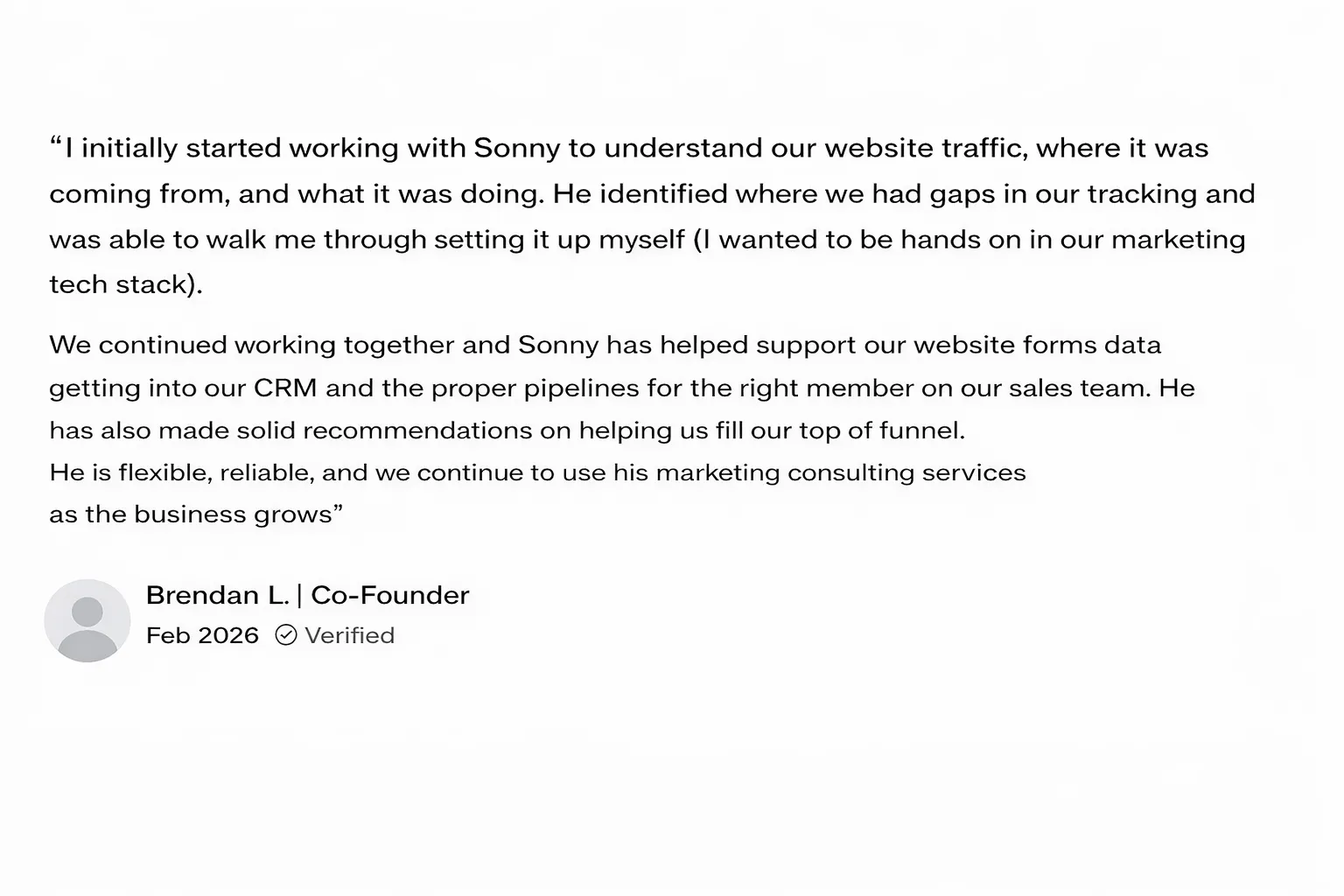
Through 1-on-1 consulting, we helped business owners understand what was working, what wasn’t, and where to focus next. In many cases, the biggest breakthroughs came not from spending more, but from simplifying strategy and aligning efforts.
Tracking Became the Foundation for Confident Decisions
As our work expanded in 2025, it became clear that many businesses were operating on unreliable data. With anti-cookie policies taking hold in 2024, in 2025 attribution was broken, conversions were misfiring, and reports conflicted across platforms.
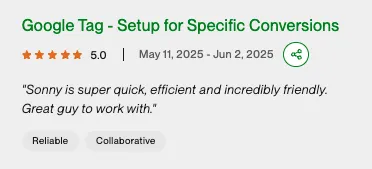
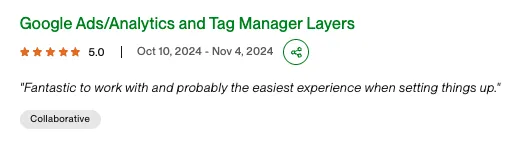
We took on advanced tracking projects—sometimes standalone, sometimes embedded into broader engagements—focused on rebuilding attribution, clarifying conversion logic, and restoring trust in the data. Once tracking was fixed, optimization stopped being guesswork and started producing consistent results. Beyond tracking we provided advanced dashboards which helped us support our clients in making smart business decisions about which channels to best invest in and which ones to cut loose.

Automation and Custom Systems Became a Force Multiplier
Going into 2025, one thing was already clear from our previous work at Cosmo Californie Media: growth is rarely limited by marketing performance alone—it’s most often constrained by disconnected systems behind the scenes.
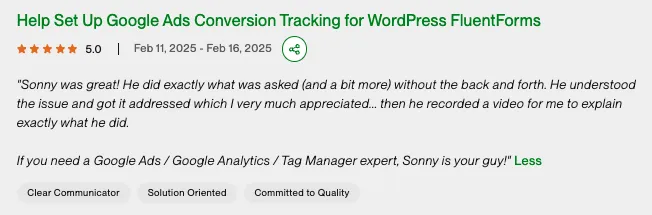
In response, we launched a new department dedicated entirely to custom automation, system connectivity, and database management. Many clients engaged us exclusively for this work, without any Google Ads or lead generation management. Their issue wasn’t demand—it was what happened after a lead entered their ecosystem.
We audited software stacks, synced data across tools, eliminated redundancies, and built custom systems tailored to how teams actually operated. The result was simpler workflows, cleaner data, and systems that were easy to understand, maintain, and adapt as businesses grew.
Through this department we are also exploring how AI Agents can support businesses in a robust way and we are working on a couple of projects with clients to do just that. More updates to come.
Partnering for Quality Over Bloat
Rather than becoming a bloated full-service agency, we focused on what we were experts at - and partnered with trusted specialists in Social Media Marketing, Web Development, and SEO. This model allowed clients to access high-quality execution across channels without the cost or inefficiency of traditional agency structures.
More importantly, we helped clients manage and evaluate these specialists—ensuring accountability, aligning KPIs, and preventing the common scenario where businesses overpay for underperformance.
Looking Ahead: The Focus for 2026
In 2026, our primary focus remains supporting our existing clients in the most robust way possible—going beyond our immediate responsibilities to help solve broader business challenges. This includes contributing strategic perspective across marketing, systems, and operations, and sharing relevant insights from our network and cross-industry experience when they can materially impact the business.
We are also opening a highly limited private Fractional CM(T)O offering, led directly by Sonny Hughey and capped at two companies total in 2026.
In this engagement, our owner, Sonny, will serve as your acting CM(T)O, becoming an integral part of the business at a significantly reduced cost compared to a full-time executive. The role is hands-on and embedded—driving marketing direction, supporting hiring decisions, managing contractors and agencies, and ensuring sales, marketing, and operational efforts remain aligned. This is not advisory-only work.
This service will allow businesses to rapidly integrate an agile sales, marketing, analysis, operational arm without unnecessary overhead or friction, while maintaining clear ownership and accountability. If interested in this service, reach out to Sonny directly or book a time on his calendar here
The Core Lesson From 2025
After working with more than 100 businesses in 2025, the common thread was structural but nuanced. From agencies, to local businesses, to international SaaS companies, the upside consistently came from tightening tracking, cleaning up attribution, improving lead handling, and aligning campaigns (internally and externally) with how the business actually converted.
Knowing which holes to plug—and which channels were worth pursuing—made the difference. In many cases, a technical and impartial perspective clarified what needed attention and what didn’t. As AI becomes both a wild card and a meaningful implementation opportunity across industries, operating through this lens becomes even more important. That’s where our expertise sits, and it’s the work we’re focused on expanding in 2026.
Questions about this case study
What results does the 2025 review report?
A B2B training centre grew revenue at least 260%, $220K year over year, with return on ad spend up to 3.9 on about 30% more spend. A B2B SaaS payment system cut its cost per booked demo from $400 to $197 by passing HubSpot and Calendly data back into Google Ads. A technical SaaS company generated 3x the leads year over year at the same cost per lead after switching from webinar registrations to a free handbook. A medical agency's churn-risk rate fell from 31% to 3.1%.
Why are some of the revenue numbers under-reported?
For the two training-centre accounts, the clients had not signed up for dynamic value tracking, so each purchase was reported at the value of their cheapest offering. The page says this plainly, because if the ads show profitable performance on a conservative value, reality is higher.
What does the article say about tracking?
With anti-cookie policies taking hold in 2024, by 2025 attribution was broken for many businesses, conversions were misfiring and reports conflicted across platforms. Rebuilding attribution and clarifying conversion logic turned optimisation from guesswork into consistent results, and dashboards then showed which channels to invest in and which to cut.
What is the Fractional CM(T)O offering mentioned at the end?
A private engagement led directly by Sonny Hughey and capped at two companies in 2026, where he acts as the company's CM(T)O, hands-on and embedded, driving marketing direction, supporting hiring, managing contractors and agencies, and keeping sales, marketing and operations aligned. The role is described in What Is a CM(T)O.
How does Cosmo Californie work with other specialists?
Rather than becoming a bloated full-service agency, we partnered with trusted specialists in social media marketing, web development and SEO, and helped clients manage and evaluate those specialists against aligned KPIs so they stopped overpaying for underperformance.
Working with us.
Let's figure out where your growth is getting stuck.
Book a discovery call with Sonny — a focused conversation about your business and where the opportunities are.
Book a Discovery CallMore case studies

Medical Agency SEM White Label
Red-flagged accounts fell from 22 to 3 while the medical agency's book grew from 71 to 98 Google Ads accounts.
How to Understand What's Actually Working in Your Business
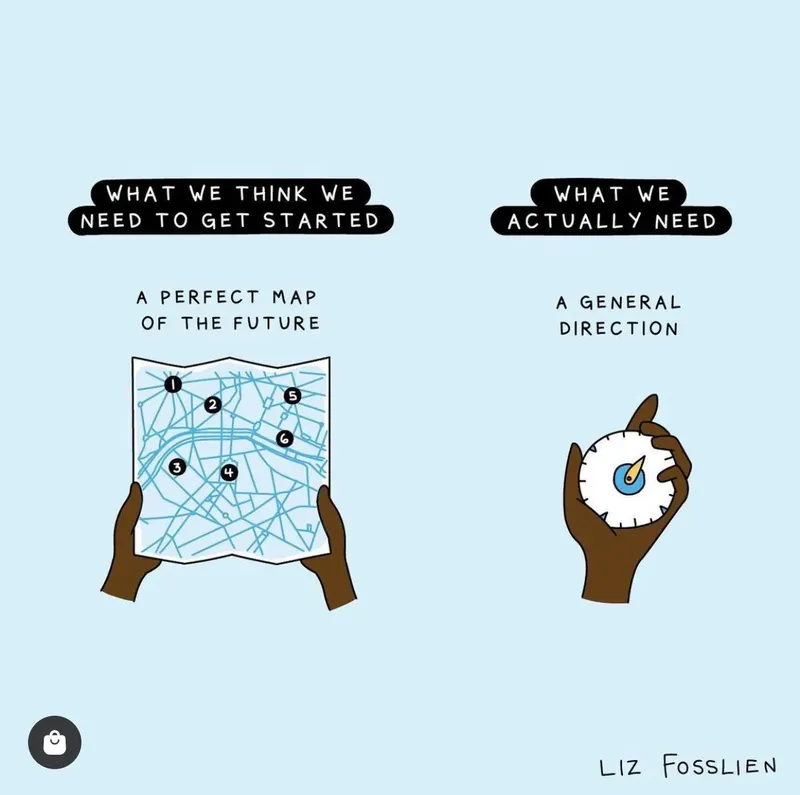
Start with the questions you want answered, check the data exists, connect the systems, and turn it into decisions.

What Is a CM(T)O and When It Is Right for Your Business
Why so many fractional CMO engagements fall short, and the revenue systems a CM(T)O owns once growth becomes a coordination problem.