A marketing agency with three years of flat revenue, no CRM and a failed SDR hire invested about $11,000 over six months with Cosmo Californie Media to build a sales system. We set up Close CRM, a semi-automated audit of each target business across six problem areas, multi-channel outreach by email and automated direct mail, and an interactive nurture campaign. The system broke even in month three and produced $67,250 in monthly recurring revenue, a 37.03x return, with MRR up 2.7x and 87% of clients in the nurture campaign upgrading their services.
- Client
- Marketing agency in a medical niche (not named)
- Industry
- B2B services, marketing agency
- Services
- Sales system design, CRM implementation, outbound and nurture campaigns, SDR process
- Period
- 6 months
- Tools
- Close CRM, automated email and direct mail
- Reported in
- USD
Challenges / Opportunities
This client was a marketing agency without a steady sales funnel. For the previous 3 years their revenue numbers were flat with no growth. Their average client lifecycle was between 6-9 months. Their client numbers were maintained because the owner received 3-4 professional referrals each year (Close rate around 50%)
The agency had tried hiring a Sales Development Rep (SDR) in the past with no success. Upon working together on this project, they were outsourcing the SDR position to an agency specialized in the appointment setting / SDR space.
They were using Google Sheets to track leads after the 1st Discovery Call and had no CRM.
We knew this company had a couple clients that had been with them for more than a year and were in the same niche. This meant we could leverage the agency’s success there to concentrate on a specific client type.
In addition, as a power user of Salesforce in the past, I knew an alternative lightweight CRM with many of the same features, could streamline the operations and allow us to synchronise physical and digital efforts together (email marketing and automated direct mail with the daily work of a SDR).
The Work We Did / Lessons Learned
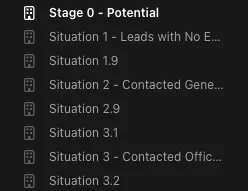
- We immediately identified the choke points for the sales process which were:
- Getting Decision Maker on the phone
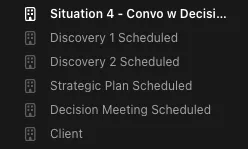
- Scheduling 1st Discovery Call with Decision Maker
- BONUS: Short lifecycle of existing clients
- Integrated a lightweight CRM
- Defined micro steps for each choke point for tailored segmentation
- Implemented multi channel (physical / digital) campaigns for each micro step
Marketing agency’s are one of the most competitive fields to be working in. Most businesses don’t trust an agency unless they come as a referral, so setting up a cold lead and sales funnel must be extremely targeted and highly segmented so from the moment the SDR speaks to the business, they are solving a real problem. We defined 6 areas where the agency can help most. We supplied the SDR rep with a easily digestible audit (semi automated) of each target business highlighting how it performed in those 6 areas. The SDR rep would only talk about an area if the the target business was struggling in that space. This increased their ability to get a decision maker on the phone.
What we learned however, is that in the medical space, you cannot outsource the SDR role to an SDR agency. The SDR agency was able to get the decision maker on the phone, but did not have a strong enough understanding of the medical jargon of the niche to setup a discovery call. Conversations with a decision maker went up significantly, but Discovery 1 calls stayed flat. So we hired an SDR internally for the agency who had a professional background in the medical space and could be taught the 6 areas of marketing where the agency could help. This SDR was hired on a part time basis, with a commission incentive for discovery calls scheduled.
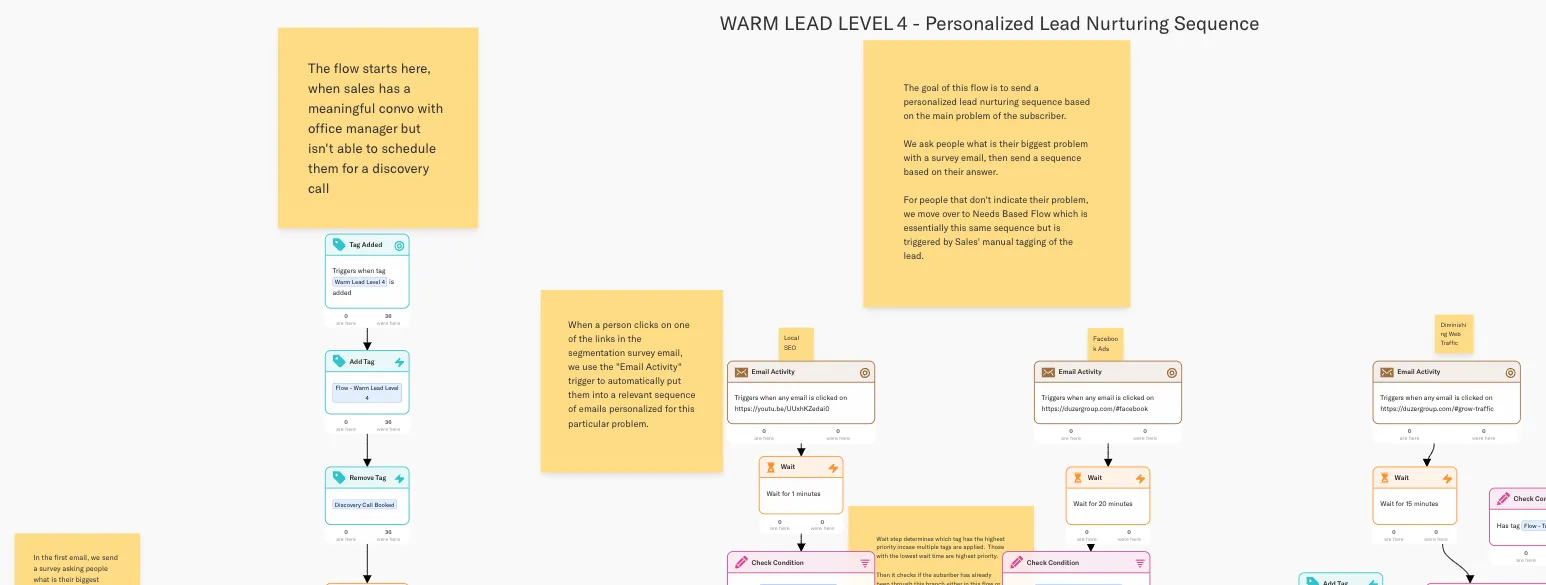
Moving forward we leveraged the audit as a way to collect contact information if the decision maker didn’t want to set a discovery call. That would kick start an automated email + post card campaign that highlighted each area the clinic struggled in. This campaign pushed the decision maker to book the discovery call and talks about the solutions the agency provides for the area the business is failing. The campaign lasts between 2-10 weeks depending on the number of areas the target business needed help with. In conjunction with follow up calls from the SDR, the agency began scheduling 2-3 discovery calls each month.
Results & Lasting Benefits
This client was unique in the sense that it was their first time using a CRM. This can be a big feat to begin using, so we wanted to make sure it was simple to navigate and they were setup with the right foundations for longterm, continued growth. We recommended CLOSE for this particular use case because of its power dialer for the SDR and it's timeline functionality that could sync with communication that took place outside of the CRM.
We were able to craft automated campaigns that trigger when the SDR reaches defined choke points in the sales funnel. This allowed for the target point of contact to be “warmed up” and educated reducing the barrier to convert on the SDR and the owner of the agency who began speaking with leads at discovery 1 or 2.
Overall the agency invested close to $11,000 over 6 months. At the 3rd month (it is about a 3 month sales cycle) the system reached breakeven, and it was game on from there. We implemented the “Discovery Nurture Campaign” which has a high focus on non marketing pain points of the target business and add on solutions the agency provides. This campaign is interactive in the fact that it pauses and plays based on the user and can last from 3-6 months. It runs after Discovery 1 call through client onboarding and continues during the first months of service. It has dramatically improved the agency’s upsell and customer lifetime value. 87% of clients who were in this campaign have upgraded services. Also the average customer lifecycle (stickiness) has increased above 1 year and is continuing upward with each month.
Questions about this case study
What was the sales problem before the engagement?
Revenue had been flat for three years. The agency relied on three or four professional referrals a year, closing about half of them, with a client lifecycle of six to nine months. Leads after the first discovery call lived in Google Sheets, there was no CRM, and a previous attempt to hire a sales development rep had failed, so the SDR role was outsourced to an appointment-setting agency.
Why was the outsourced SDR replaced?
The SDR agency could get decision makers on the phone but lacked the medical vocabulary to turn the conversation into a discovery call, so conversations rose while first discovery calls stayed flat. The agency then hired a part-time internal SDR with a professional background in the medical space, paid with a commission for discovery calls scheduled, and taught them the six areas where the agency could help.
How did the audit and the nurture campaign work?
Each target business got a semi-automated audit of six areas, and the SDR only raised an area where that business was struggling. If the decision maker would not book a call, the audit collected contact details and started an automated email and postcard campaign lasting two to ten weeks. A separate Discovery Nurture Campaign runs from the first discovery call through onboarding and the first months of service, pausing and resuming based on the lead, for three to six months.
What were the results?
Breakeven at month three, then 2 to 3 discovery calls a month, $67,250 in monthly recurring revenue from a $10,900 total investment, a 37.03x return and a 2.7x increase in MRR. Of the clients who went through the nurture campaign, 87% upgraded services, and the average customer lifecycle rose above one year.
Why Close rather than Salesforce or HubSpot?
It was the client's first CRM, so it had to be simple to adopt. Close has a power dialer for the SDR and a timeline that syncs communication that happens outside the CRM, which were the two features this process needed. Sonny was a Salesforce power user earlier in his career, and a lighter tool fit this stage better.
Working with us.
Let's figure out where your growth is getting stuck.
Book a discovery call with Sonny — a focused conversation about your business and where the opportunities are.
Book a Discovery CallMore case studies
Google Ads Optimization
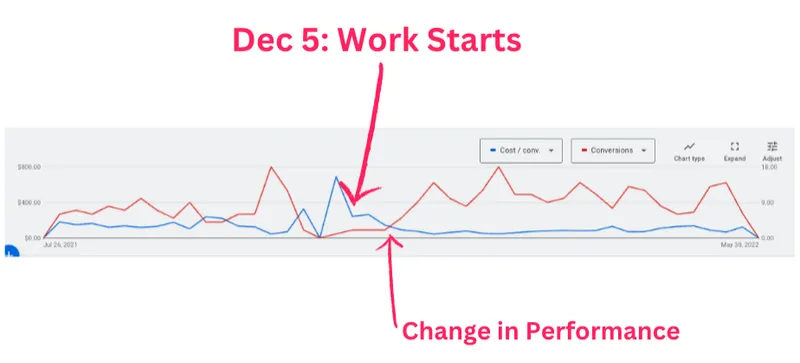
5.13x ROAS and 42.8% lower cost per lead for a medical practice with five offices across Dallas–Fort Worth.
LCRM: Lead Tracking System
One tracking system follows every lead from first contact to procedure start, so each channel is credited across the customer lifetime.

Zap and Make Automation Scenario Maintenance
Campaigns launch 12 days faster after we audited and standardised the Zapier and Make scenarios behind a marketing agency's client work.