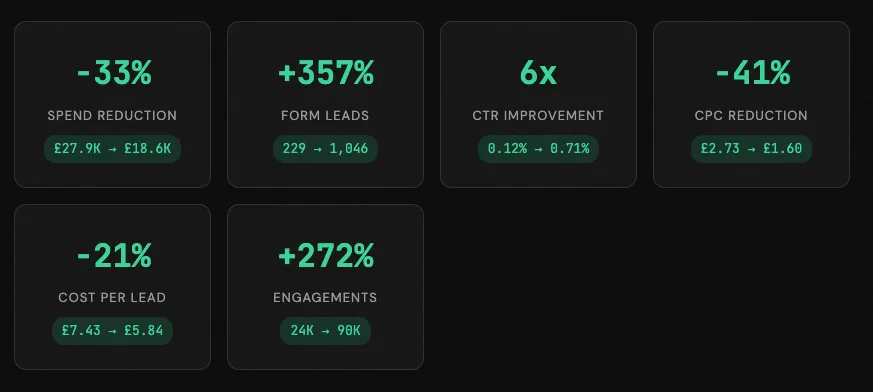
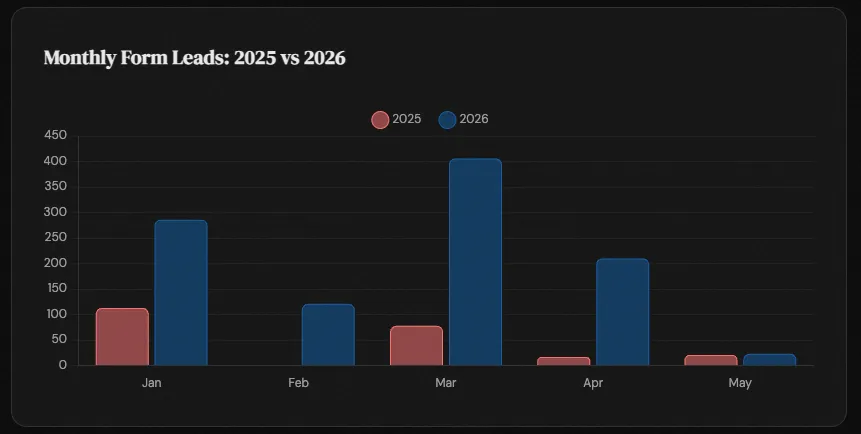
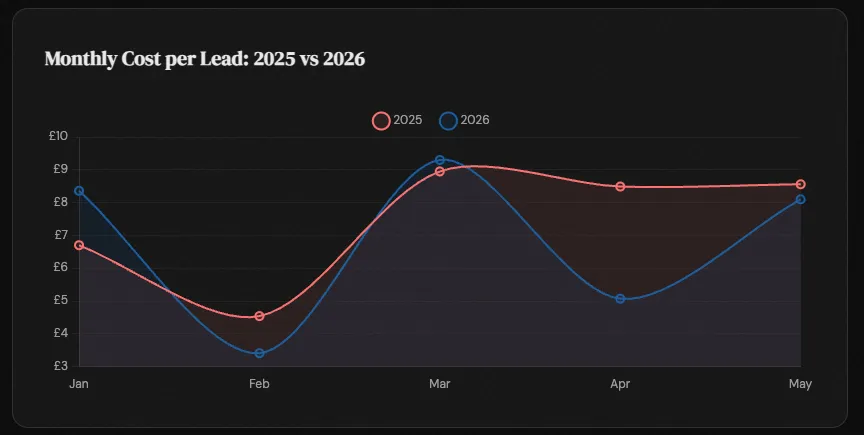
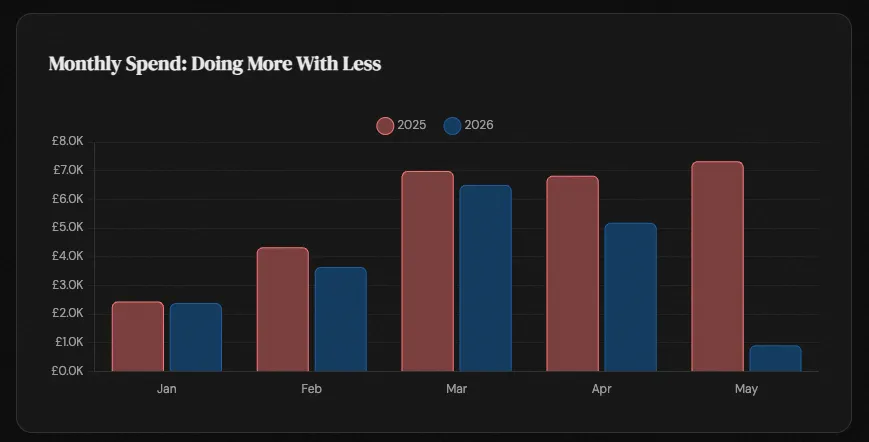
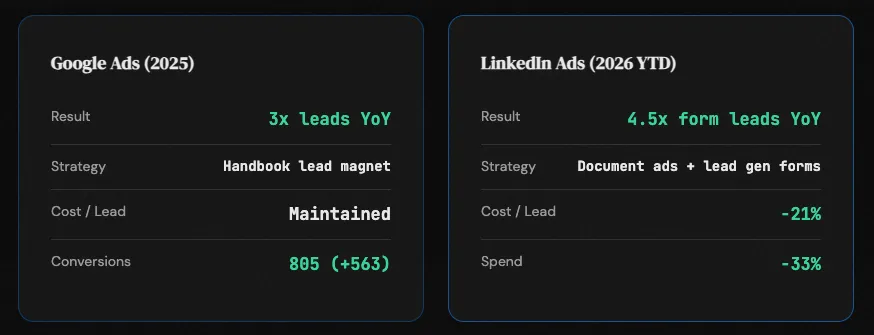
A B2B technical SaaS company that makes building performance simulation software for engineering firms produced 4.5x form leads at 33% less spend on LinkedIn (January to May, year over year) after Cosmo Californie Media applied the lead-magnet strategy that had already given it 3x Google Ads leads at the same cost per lead. We turned the client's handbooks and guides into LinkedIn Document Ads with lead forms, wound down the brand awareness campaigns that had taken 70% of budget, and layered ICP targeting into retargeting. The handbook drove 844 leads in its first month and the retrofit guide converted 32.5% of clicks.
- Client
- B2B technical SaaS, building performance simulation software (not named)
- Industry
- Engineering software, AEC
- Services
- LinkedIn Ads and Google Ads management, lead magnet strategy
- Period
- August 2025 to May 2026, compared January to May year over year
- Tools
- LinkedIn Document Ads with lead gen forms, Google Ads
- Reported in
- GBP
A fresh set of eyes on a familiar product
How a unified acquisition strategy across Google Ads and LinkedIn produced 4.5x form leads at 33% less spend — by letting one channel’s insights inform the other.
01 — The Setup
Already in the building
We’d been managing Google Ads for this client — a B2B technical SaaS company that makes building performance simulation software used by engineering firms worldwide. Their product is niche, deeply technical, and requires an engineer in the room for most sales conversations. Webinars had become the primary entry point into the funnel.
On the Google side, we’d already tackled the structural challenges: conversion tracking accuracy, bidding strategies, tighter geo segmentation, and a shift from webinar-first to a lower-friction lead magnet strategy. The result: 3x leads year-over-year while maintaining the same cost per lead.
When their internal team needed additional support across channels, we stepped in on LinkedIn — already familiar with the product, the audience, and the go-to-market motion. Managing both channels meant we could align messaging, share audience insights, and apply what was working in one place to the other.
🤝 When one team owns the full acquisition picture — search, social, content strategy — insights compound instead of staying siloed. The question was whether what we’d learned on Google would translate to a completely different platform and buying context.
02 — What We Found
A strong awareness foundation, ready for the next gear
The client’s LinkedIn strategy had been deliberately weighted toward brand awareness — a reasonable approach for a niche technical product that needs multiple touchpoints before a prospect is ready to engage. 70% of budget went to Brand Awareness campaigns, building recognition among engineering and design professionals globally. The remaining 30% went to Retargeting campaigns that captured leads from the warmed-up audience.
The awareness investment had built a solid foundation. But we saw an opportunity to shift the balance: use the client’s excellent technical content — handbooks, compliance guides, retrofit resources — as lead magnets that could capture demand more directly, while still reaching the right professionals.
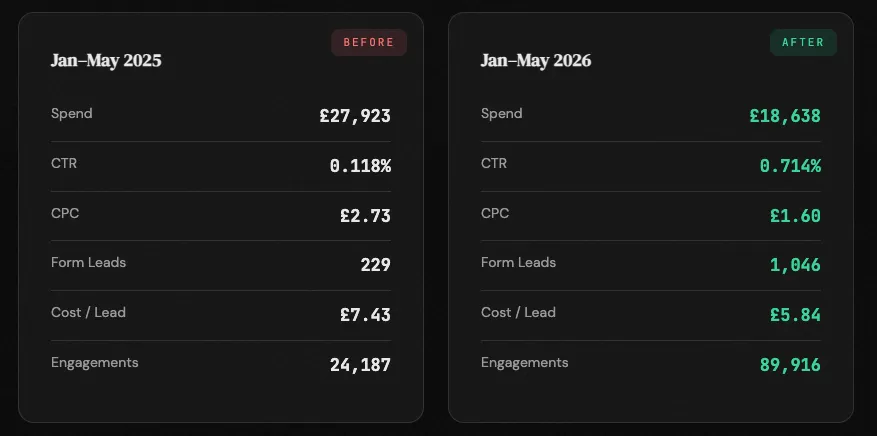
Before & After: Jan–May Year-over-Year
03 — What We Did
Same playbook, different platform
The Google Ads insight transferred directly: cold technical audiences respond better to free, high-value content than to webinar registration asks with timing friction. Working with the client’s marketing team, we applied the same lead magnet strategy — leveraging their existing library of handbooks, guides, and compliance resources — and restructured the account around lead capture.
Aug – Oct 2025 · Lead magnet testing begins Launched the client’s technical handbook and retrofit guide as LinkedIn Document Ads with lead gen forms. The handbook generated 844 leads in its first month. The retrofit guide hit a 30% lead rate — nearly one in three clicks converted.
Nov 2025 · Shifting the budget balance With lead gen content proving itself, we collaboratively wound down the Brand Awareness campaigns to redirect budget toward what was working. The awareness foundation had done its job — now it was time to harvest.
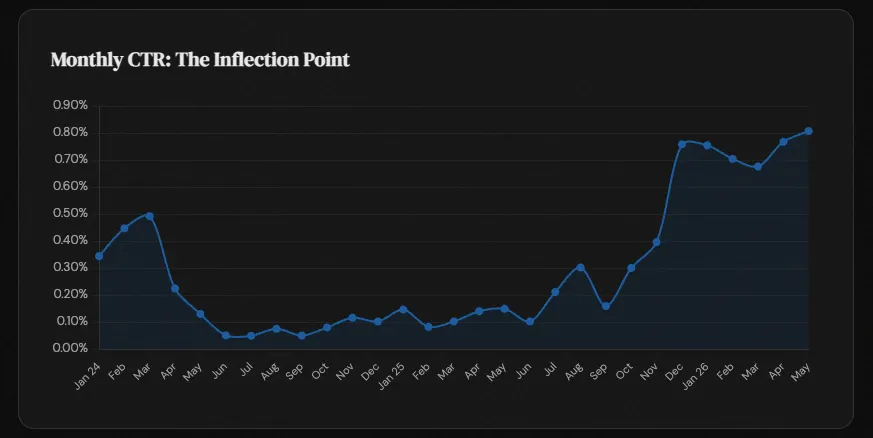
Dec 2025 – Jan 2026 · The CTR inflection point CTR jumped from 0.30% to 0.76% as the account shifted to lead gen. CPC dropped to £1.16. The same audience that had been seeing awareness content was now engaging with content they could act on immediately.
Feb 2026 · New vertical launched Launched a whitepaper campaign targeting a new ICP — data centre design engineers and facility consultants. 102 leads at £33.56/lead in a highly specialised vertical. Early signal is strong.
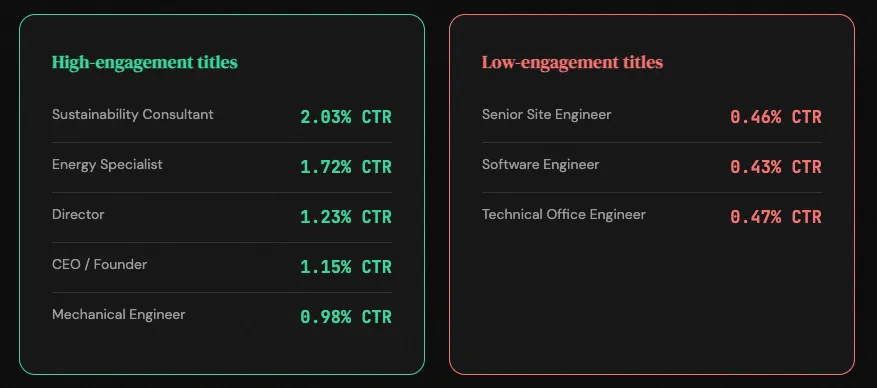
Mar – May 2026 · ICP layering + retargeting Added new demographic targeting layers directly into retargeting campaigns. Sustainability consultants (2.03% CTR), energy specialists (1.72% CTR), and directors (1.23% CTR) emerged as the highest-engagement personas.
04 — The Numbers
Less money in, more leads out
05 — What Worked Best
The content that converted
The same insight from Google Ads held true on LinkedIn: free, high-value educational content dramatically outperforms direct product pitches for cold technical audiences.
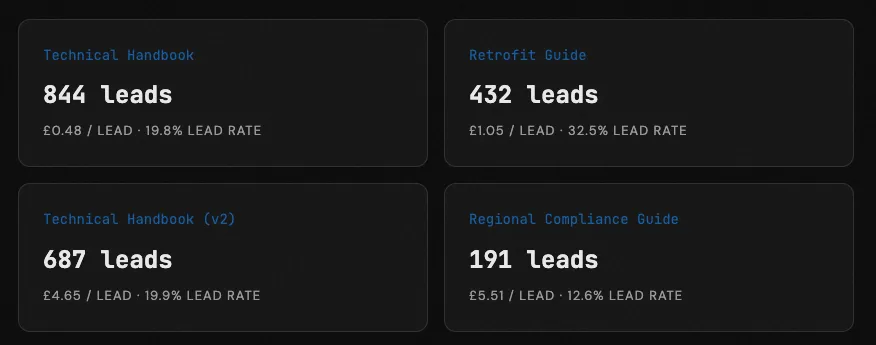
📐 The Retrofit Guide’s 32.5% lead rate means nearly one in three people who clicked submitted their details. For context, LinkedIn’s B2B benchmark is 2-5%.
06 — Who Responded
The ICP sharpened itself
With better content in the feed, the demographic data started revealing exactly who the ideal customer is — and where impressions were going to less relevant audiences.
The company-level data revealed that 43 companies with “Very High” engagement generated a third of all leads — primarily global engineering consultancies, specialist building services firms, and green building organisations. These were exactly the client’s target accounts.
07 — The Bigger Picture
One strategy, two channels, compounding results
The LinkedIn transformation mirrors what happened on Google Ads — because it was the same underlying go-to-market insight applied to a different channel. Replace high-friction conversion asks with low-friction, high-value lead magnets, and let the content do the qualifying. When both channels share the same strategic lens, each one sharpens the other.
🔑 When your product requires an engineer in the room to sell, don’t start with the sales meeting. Start with the resource that makes engineers want to raise their hand — and make sure that insight carries across every channel in the mix.
B2B Technical SaaS · LinkedIn Ads & Google Ads · Currency: GBP
Questions about this case study
What changed in the LinkedIn account?
Budget had been 70% brand awareness and 30% retargeting. From August 2025 we launched the client's technical handbook and retrofit guide as Document Ads with lead gen forms, wound the awareness campaigns down in November once lead generation had proved itself, launched a whitepaper for a new vertical in February 2026, and from March added demographic targeting layers inside the retargeting campaigns.
What were the results?
Form leads rose 4.5x (357%) at 33% less spend, January to May year over year, with cost per click down 41%, cost per lead down 21%, click-through rate up 6x and engagements up 272%. The handbook generated 844 leads in its first month, the retrofit guide reached a 32.5% lead rate against a LinkedIn B2B benchmark of 2 to 5%, and the new-vertical whitepaper brought 102 leads at £33.56 each.
Why did the Google Ads insight transfer to LinkedIn?
The product needs an engineer in the room to sell, so webinars had been the main entry point. On Google we had already found that cold technical audiences respond better to free, high-value content than to a webinar registration weeks away. The same held on LinkedIn, and because one team ran both channels the audience and messaging insights carried across.
Who responded best?
Sustainability consultants (2.03% CTR), energy specialists (1.72%) and directors (1.23%) were the highest-engagement personas, and 43 companies with "very high" engagement, mostly global engineering consultancies, specialist building services firms and green building organisations, produced a third of all leads.
What had already been done on Google Ads?
Conversion tracking accuracy, bidding strategies, tighter geo segmentation, and the shift from webinar registrations to a free handbook as the primary conversion, which produced 3x leads year over year at the same cost per lead.
Working with us.
Let's figure out where your growth is getting stuck.
Book a discovery call with Sonny — a focused conversation about your business and where the opportunities are.
Book a Discovery CallMore case studies

Google Ads Luxury Home Rental
Performance Max and competitor campaigns for a vacation rental company cut cost per lead by 34.4% on a $5,000 monthly budget.
How to Understand What's Actually Working in Your Business
Start with the questions you want answered, check the data exists, connect the systems, and turn it into decisions.

Getting Our Ears Dirty for a Motorhome Dealer
Calls of 60 seconds or more from Google Ads went from 97 to 213 for a UK motorhome dealer, and cost per lead fell 22% (March to September, 2025 vs 2026).